-
Apparel and beauty faced stronger competition.
-
3D printers and mechanical keyboards moved from niche hobbies to mainstream.
-
Pet products stayed stable with long-tail demand rather than viral spikes.
These shifts reshaped this year’s BFCM ad landscape.
Let’s start with the traffic fundamentals.
01 Traffic Fundamentals
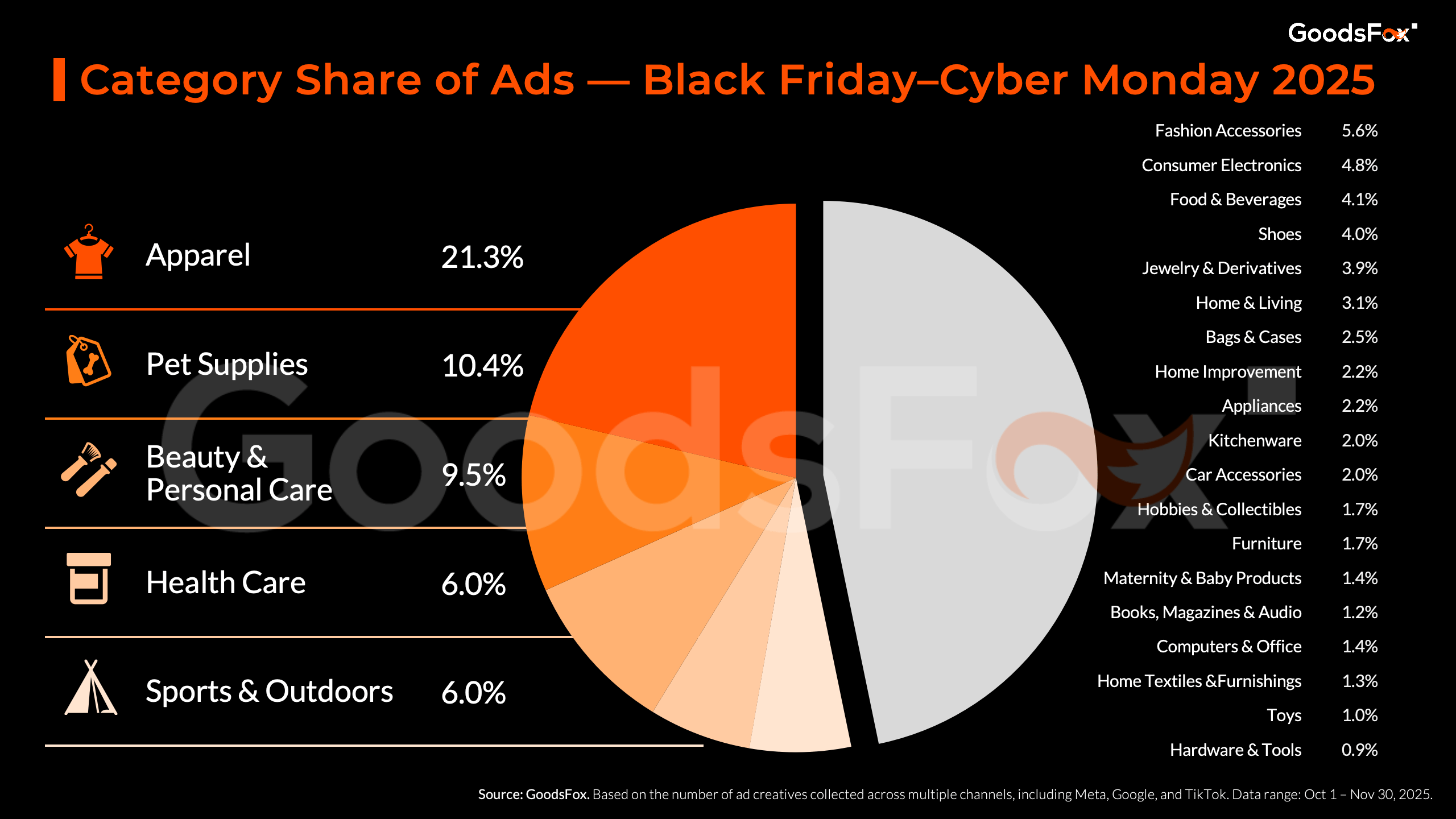
Each year brings new trends. But in terms of ad volume, traditional categories still hold most traffic.
Source:GoodsFox
From October to November, the top five industries by impressions were: Apparel, Beauty & Personal Care, Pet Supplies, Sports & Outdoors, and Health.
The ranking mirrors previous BFCM seasons. This shows that high-frequency, broad-reach, and essential categories still dominate competition.
Source:GoodsFox
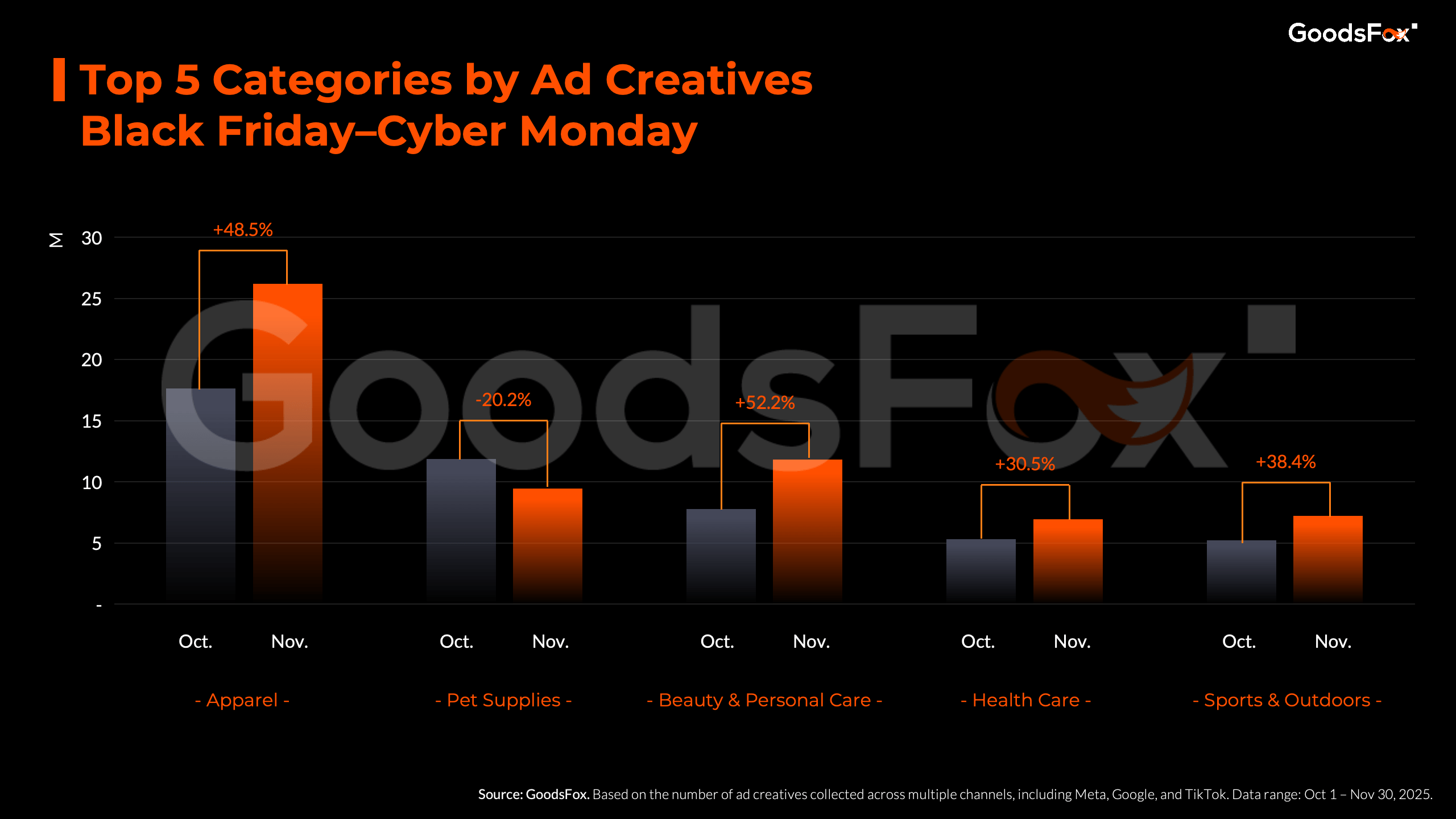
Beauty & personal care recorded the largest ad growth this year.
Shopify data also suggests that although platforms reported “record sales,” the actual growth per merchant was diluted by rising competition.
In short, platforms grew, but beauty brands captured most of the real demand spike.
Pet supplies ranked second for annual spend. The slight dip in November likely reflects intentional pacing, not industry weakness.
Sports & outdoors and health posted steady month-over-month growth at 38.4% and 30.5%.
These two categories reflect a broader 2025 trend: health consciousness + self-management upgrades. Even though BFCM is not their strongest season, their ad scale is now significant.
Overall, the BFCM traffic landscape reflects core consumer goals: look better, stay healthy, and gain emotional value.
02 From Niche Product to Mass Demand
This year’s surprise came from the computer & office category. Storage products did rise in price, but the real momentum came from 3D printers and mechanical keyboards.
These categories have always had high willingness to spend. But their communities were small, and content rarely reached a mainstream audience.
2025 changed that.
Market reports and media attention centered on Bambu Lab.
There were also reports that DJI invested in a consumer-grade 3D-printing company,
drawing new capital and attention to the space.
Why 3D printing surged in 2025?
-
First,It evolved from a “geek toy” to a desktop tool.
-
Second,Chinese manufacturers leveraged supply chain and cost advantages, pushing high-performance products to accessible price points.
-
Third,The content is extremely social-media-friendly: speed tests, prints, mechanical details, and reviews offer strong visual appeal.
GoodsFox data shows 3D-printing ads concentrate in North America and Europe,
with a male audience aged 25–45.
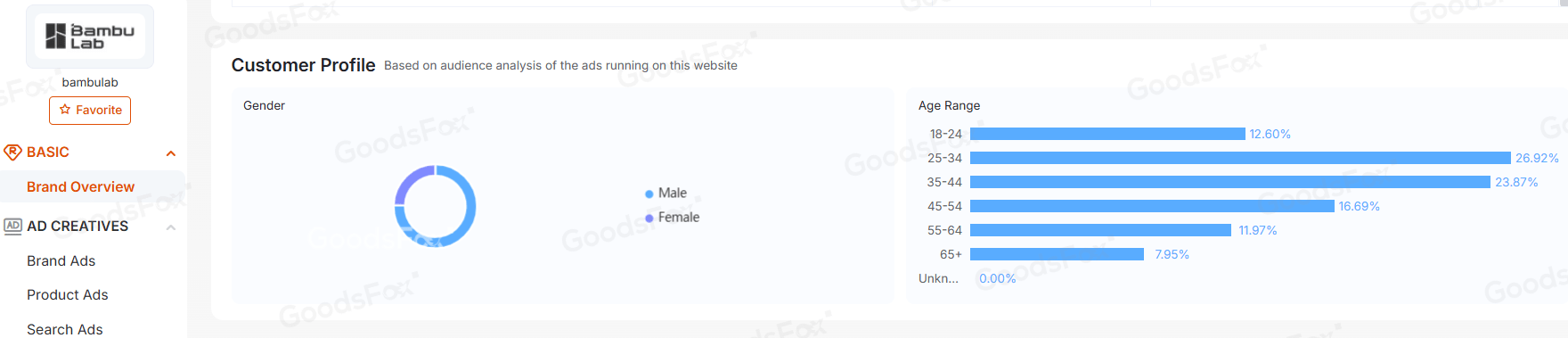
Bambu Lab's Customer Profile,Source:GoodsFox
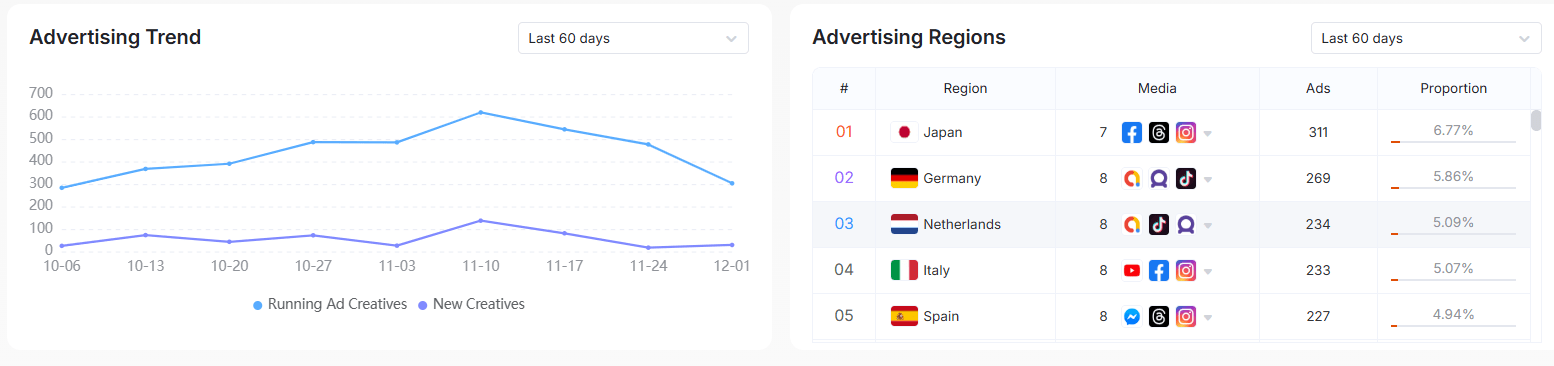
Bambu Lab's Advertising Trend over last 60 days,Source:GoodsFox
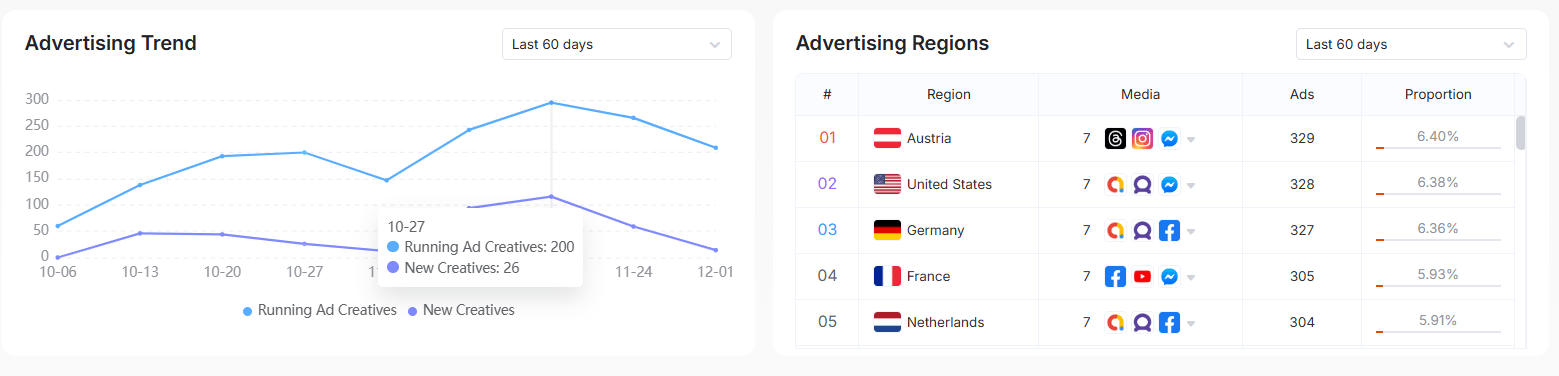
Snapmaker's Advertising Trend over last 60 days,Source:GoodsFox
Most creatives highlight real-world tests: speed, precision, and stability. Images account for nearly two-thirds of all creatives, often following a different rhythm from standard BFCM discount campaigns.
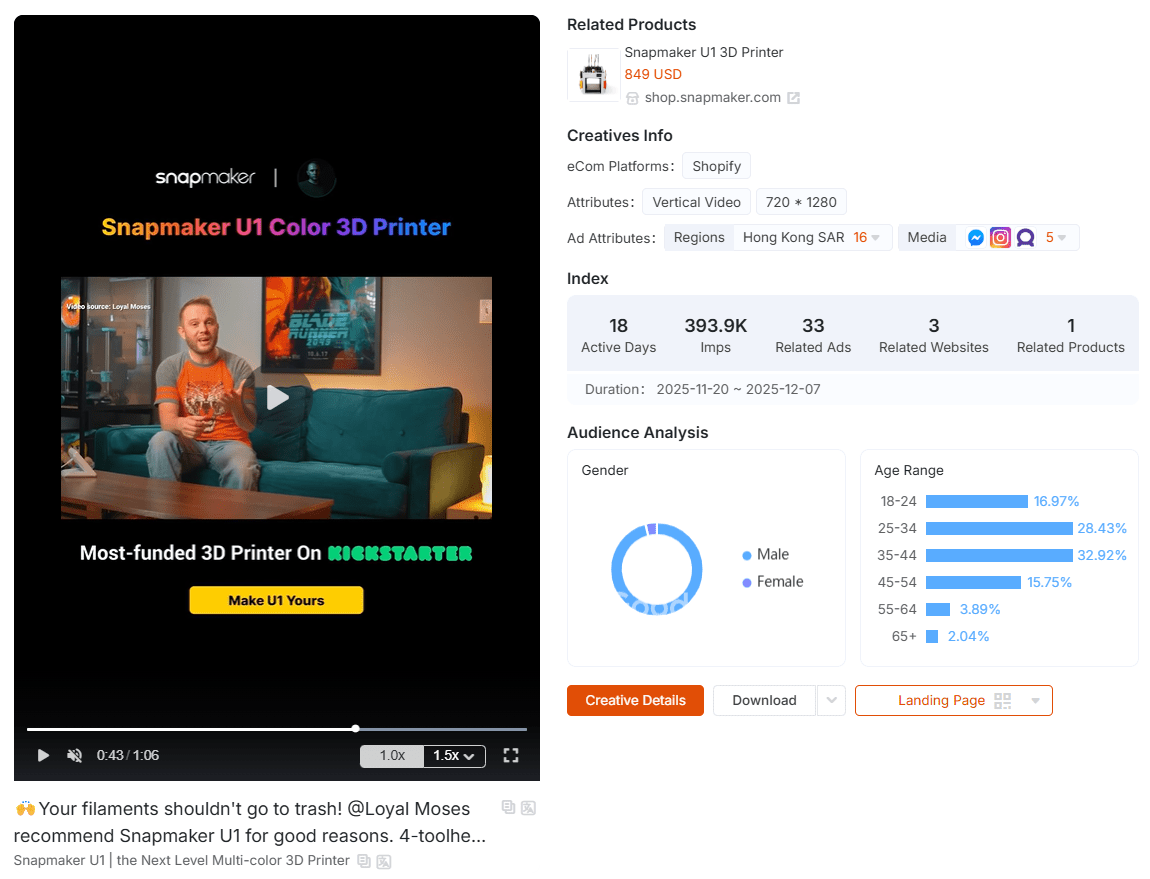
Snapmaker's creatives,Active Days: 15,Imps: 2.8w,Source:GoodsFox
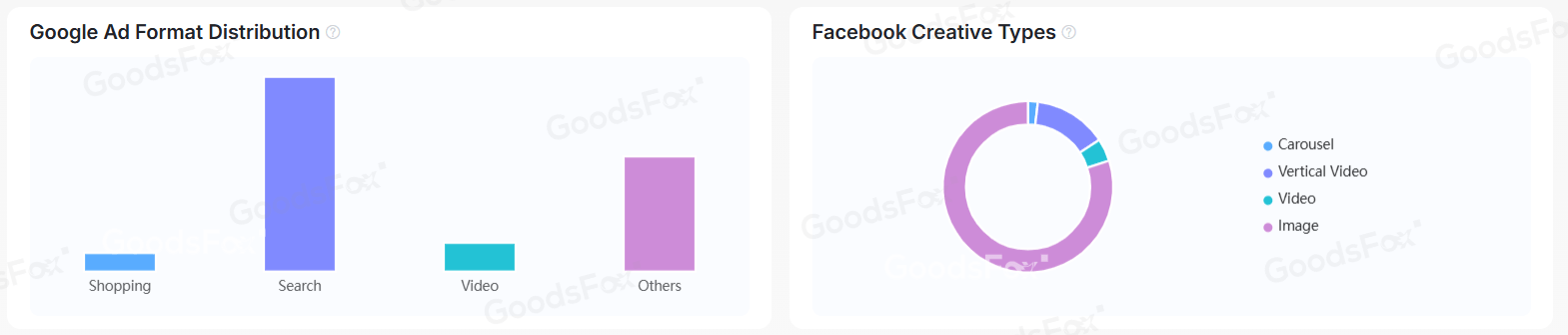
Bambu Lab's Ad Format Distribution,Source:GoodsFox
This category rarely used bold discount messaging like “XX% OFF.”
3D printers are high-consideration purchases. Price sensitivity is lower, and discounts are not the key conversion driver.
Real prospects care about brand reputation, specs, structure, compatibility, and final output.
So brand creatives focus on product value:
“Your Ideas, Engineered to Life.”
“Turn Imagination Into Reality.”
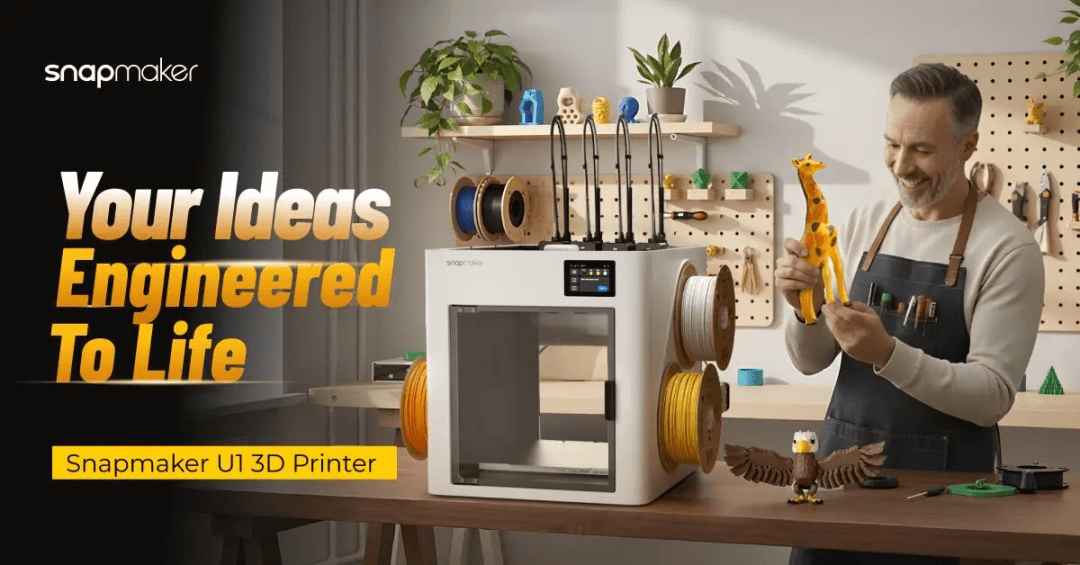
Snapmaker's creatives,Active Days: 8,Imps: 1.9w,Source:GoodsFox
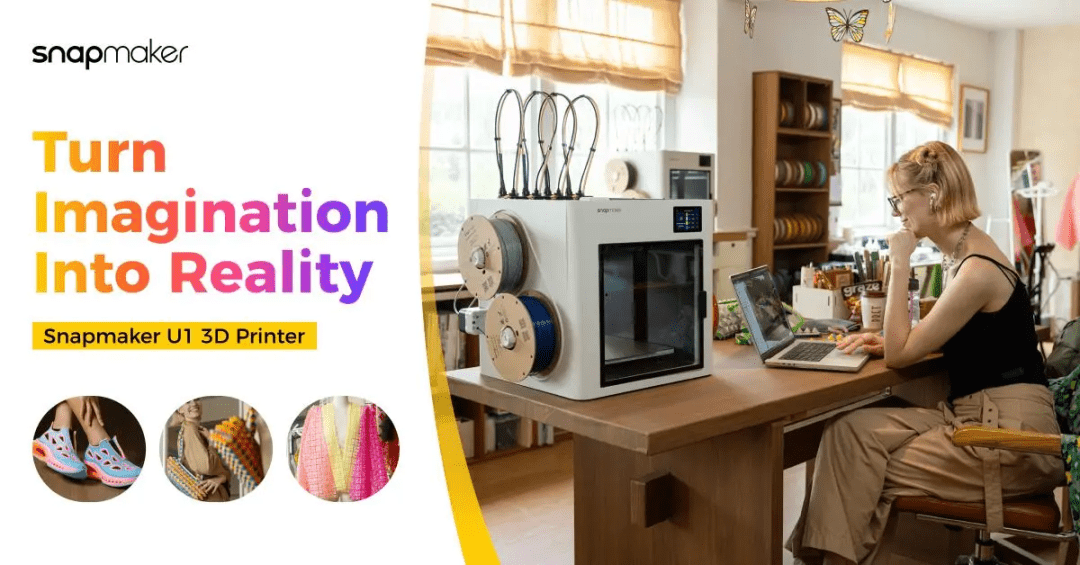 Snapmaker's creatives,Active Days: 8,Imps: 1.9w,Source:GoodsFox
This “creator mindset” connects with emotions and self-expression, giving the category its unique tone.
Competition is also structured: Bambu Lab, Snapmaker, Creality, Anycubic, and Elegoo each focus on speed, versatility, playability, or value.
Mechanical keyboards also had a breakout year.
After reviewing large volumes of ads, one insight is clear: Mechanical keyboards have a strong “desk aesthetic.” Keycap design, light effects, switch structure, materials, and desk setups create a unified visual mood. A single image can communicate design and personality.
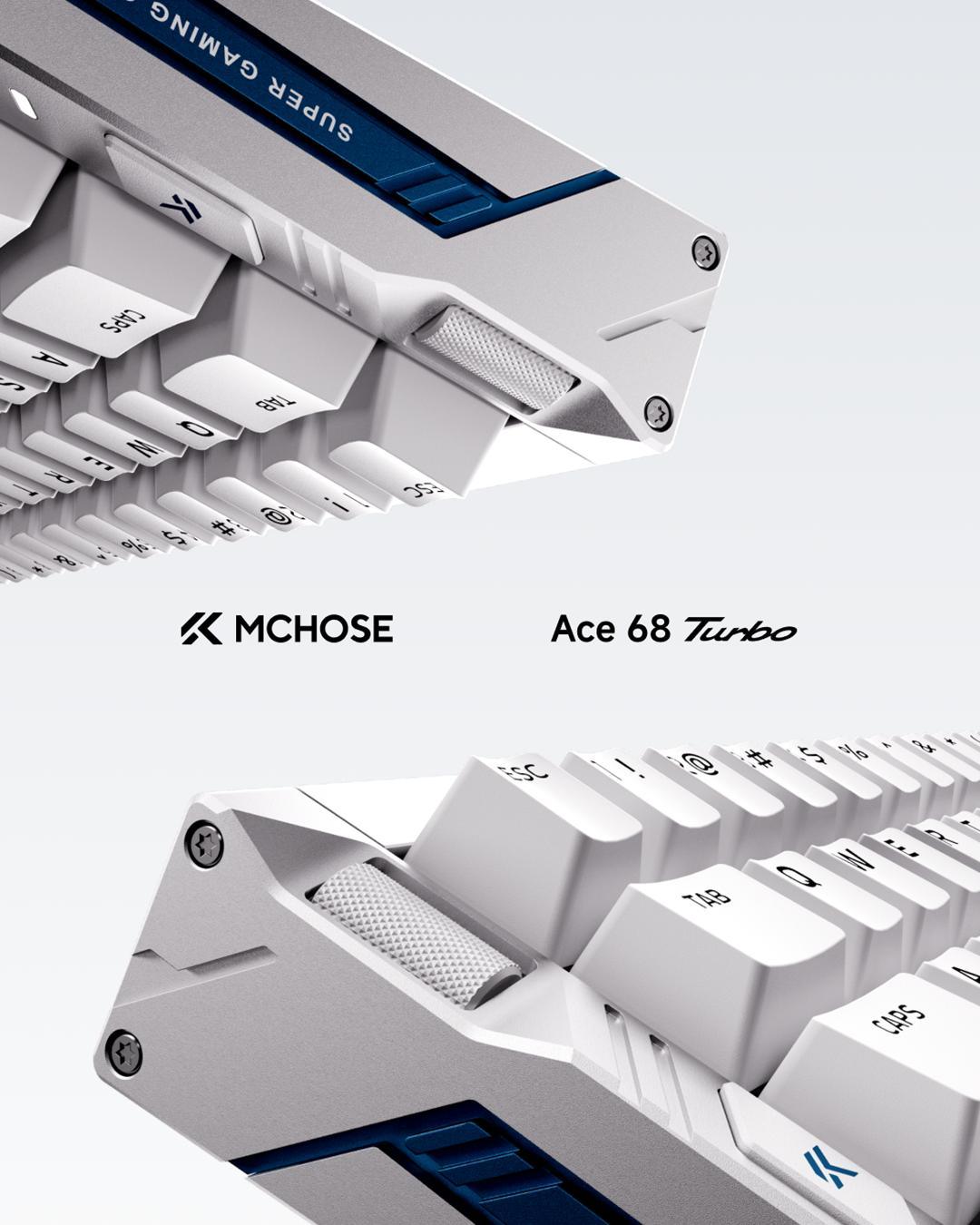
MCHOSE's creatives,Active Days: 23,Imps: 5M,Source:GoodsFox
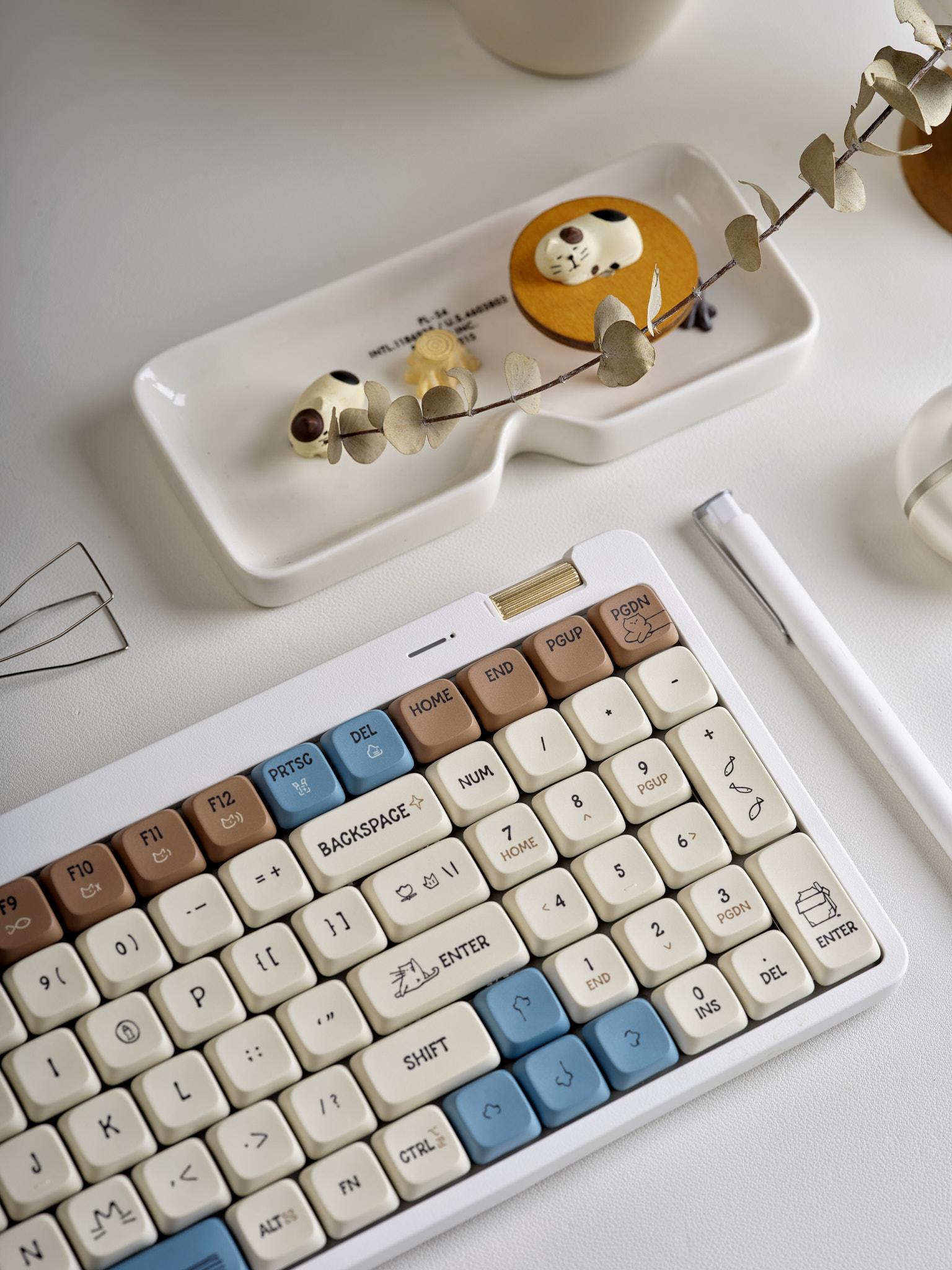
Lofree's creatives,Active Day: 21,Imps: 2M,Source:GoodsFox
Although switches and key layouts are standardized, purchase decisions often come down to aesthetics—colorways, materials, and styling.
Video ads often emphasize “immersive typing”: sound, rhythm, and macro shots that amplify tactile appeal.
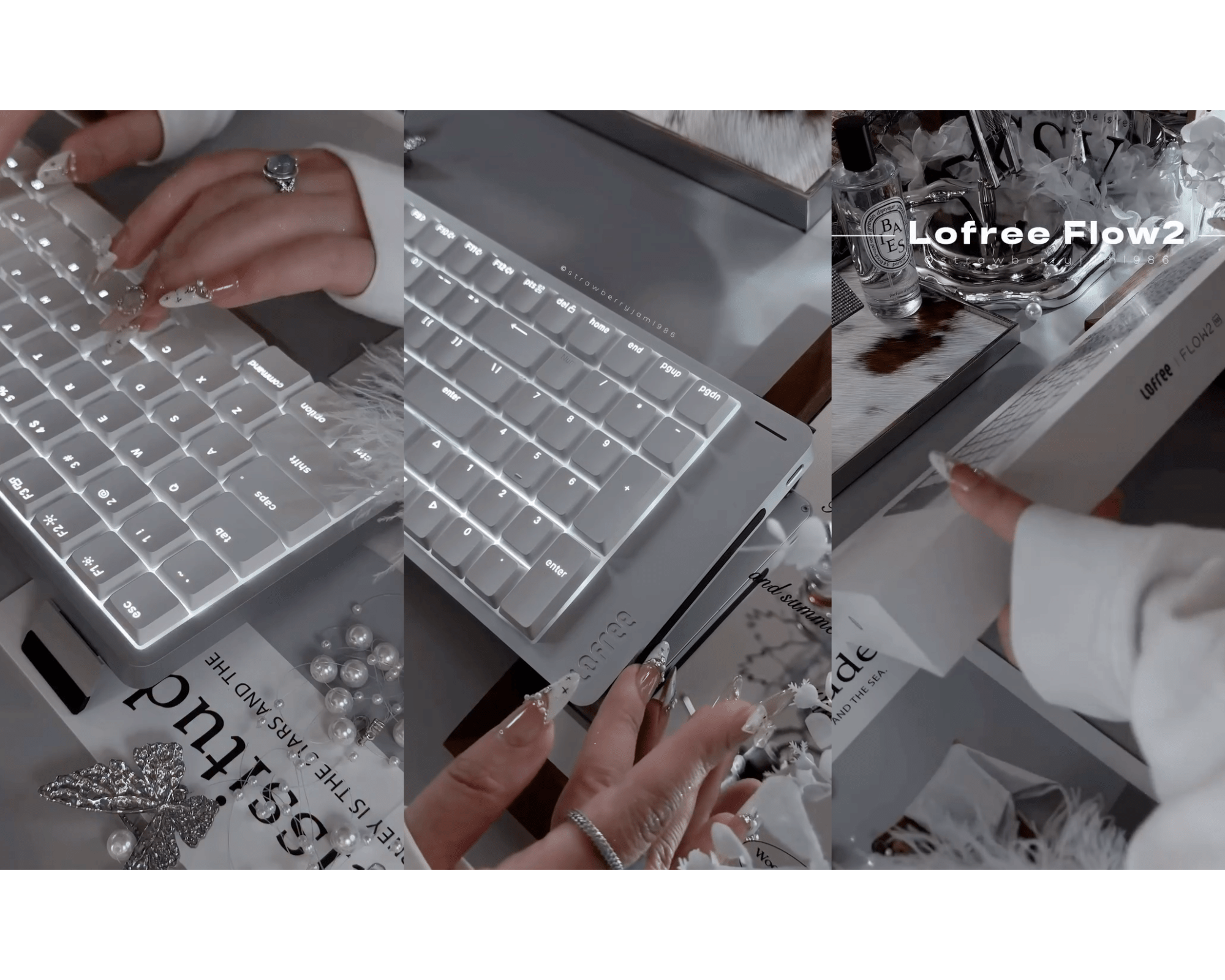
Lofree's creatives,Active Day: 21,Imps: 2.1M,Source:GoodsFox
Both 3D printers and mechanical keyboards prove one point: A category breaks out not because of a sales event, but because of its inherent value.
03 Stable Demand That Holds Up the Market
Another rising category is pet products.
Although not usually a BFCM star, its 2025 ad spend was clearly higher. The slight November dip likely reflects planned pacing, not market fatigue.
Pet consumption follows a different logic from beauty or apparel. It is driven by recurring, essential purchases: food, litter, freeze-dried snacks, supplements, and more.
This makes the pet category:
-
A stable traffic engine
-
A long-lifecycle business
-
A segment with emotional value
-
A market with diverse needs
Seasonal events simply reflect shifts in consumer motivation, not the core demand curve.
The takeaway from BFCM 2025 is clear: Strong categories shine on their own. Real growth comes from long-term value, not short-term spikes.
If you want deeper insight into category pacing, creative strategy, and competitive dynamics, the GoodsFox BFCM campaign is still live—
👉 50% off all plans, including global website ad intelligence, ad rankings, creative insights, and brand analysis.