That shift raises a critical question: Can traditional search still own the decision-making moment?
For Google, this has become a core strategic challenge.
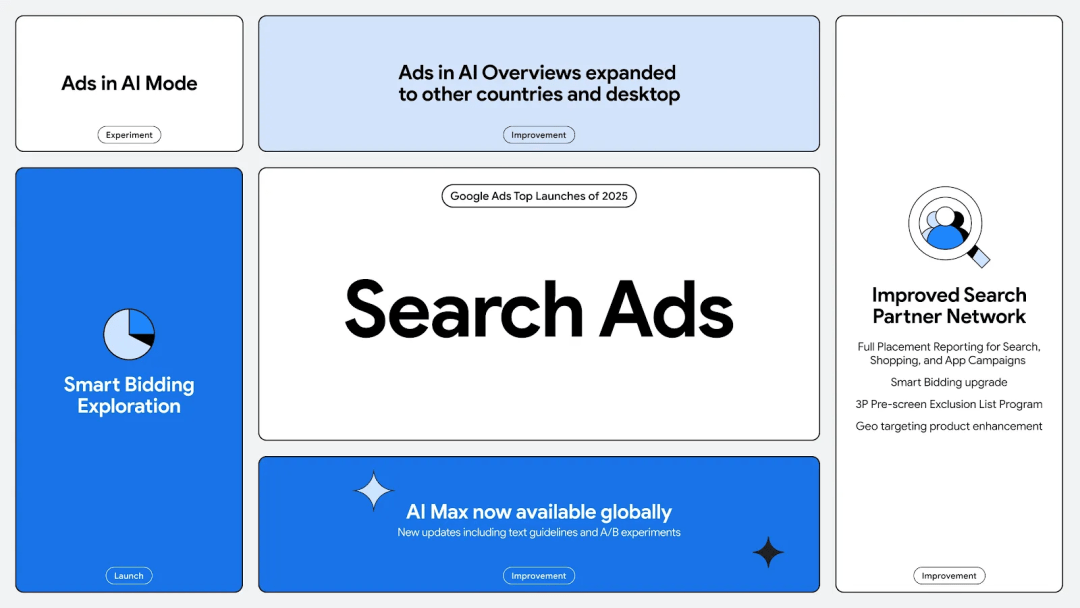
Source:《Google Ads Highlights of 2025》
Over the past year, Google’s product and monetization updates point to one direction:
AI is becoming the search experience itself — and advertising is moving closer to user decisions.
1. AI Overviews: Ads Move Inside AI Answers
Google has officially introduced ads into AI Overviews in the U.S. market.
These ads appear directly inside AI-generated responses.
They sit alongside product suggestions, comparisons, and buying guidance.
Google positions this as “helping users make informed decisions” in complex searches.
In reality, this opens a new monetization layer.
Many of these AI-driven queries were not fully commercialized before.
Even ChatGPT’s “smart shopping” features remain largely non-monetized.
For advertisers, this creates a new traffic entry point. But the bar is higher.
Ad content must be credible, information-dense, and verifiable. Low-quality copy will struggle in AI-driven answers.
2. YouTube Remains Google’s Largest Growth Engine In Videos and Content Sides
On the content side, YouTube continues to be Google’s strongest growth channel.
In 2025, Google Ads launched the YouTube Creator Partnerships Hub.
Brands can now manage creator discovery, content licensing, and ad delivery in one system.
This brings scale and standardization to creator marketing. However, purely organic UGC reach may shrink over time.
Branded creator content is becoming a structured media asset.
3. App Campaigns Shift Toward Value-Based Optimization
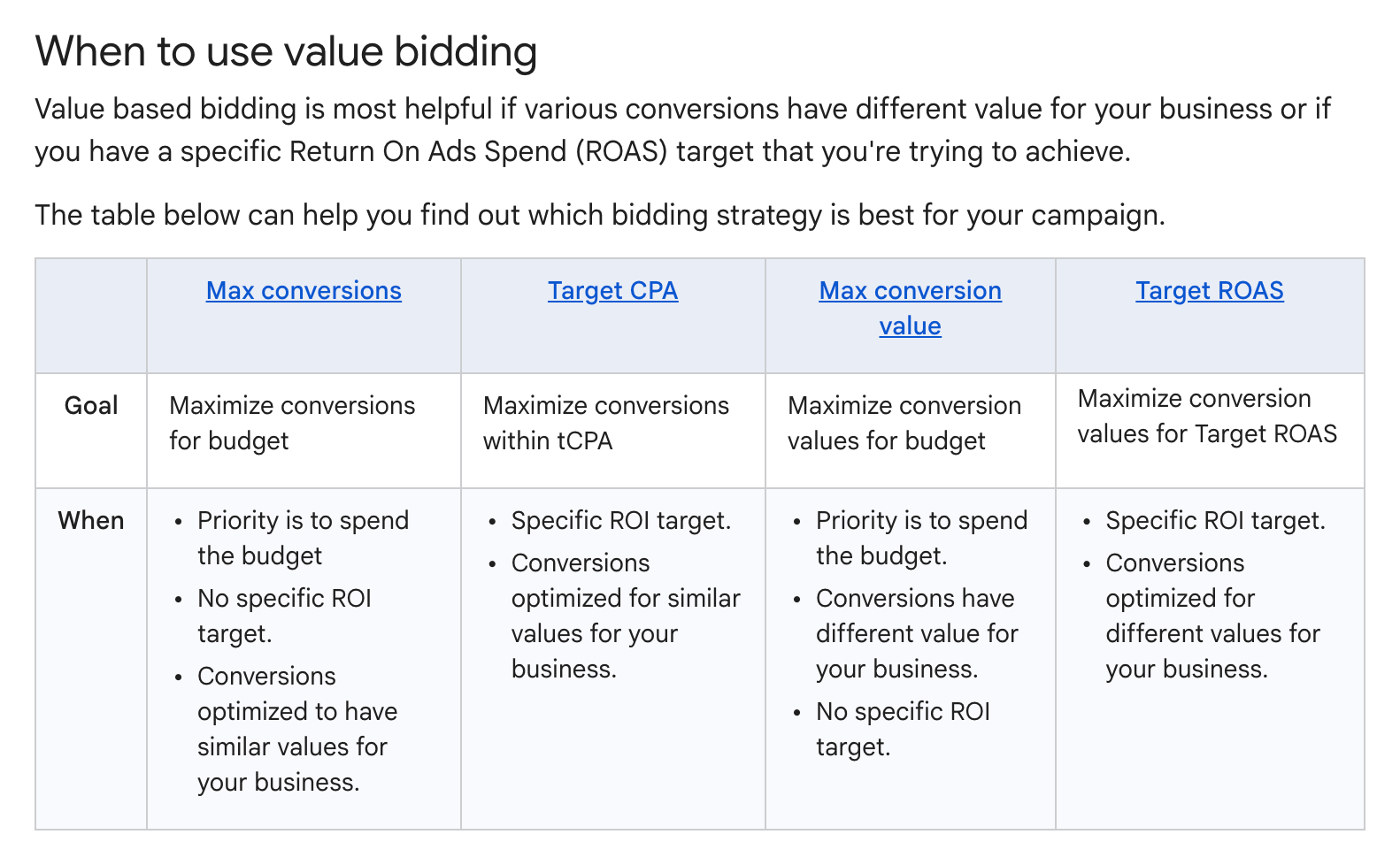
In app advertising, Google is doubling down on value-driven bidding.
Target ROAS bidding is now fully available for iOS app campaigns.
Advertisers set a target return on ad spend.
Google’s system adjusts bids dynamically using real-time and historical signals.
Optimization is no longer focused only on installs or events.
The goal is total conversion value.
This shift favors experienced advertisers who understand lifetime value.
Source:Google Ads‘s help
4. AI Creative Tools Enter Full Production Mode
Google is also accelerating AI-powered creative production.
Its viral image model, Nano Banana Pro, is now integrated into ad workflows.
Advertisers can generate or edit images using natural language prompts.
The system supports real-use scenarios, multi-product layouts, and batch edits.
This lowers the cost of creative testing dramatically.
Ad systems can iterate and learn faster.
Still, questions remain.
As AI-generated assets become common, will their performance weight change?
Will users trust AI visuals as much as real product images?
For physical products, realism still matters. AI is more likely a starting point, not the final creative.
5. What Google Is Signaling for 2026
Taken together, Google’s direction is clear:
-
Search becomes AI-native, with ads moving closer to decisions
-
Automation increases, lowering creative and operational costs
Google is no longer rewarding brands that only “buy keywords.”
It increasingly values content quality, structured information, and long-term brand credibility.
For advertisers, search is no longer just traffic acquisition.
It is becoming part of the decision system itself.
